Our ‘climate challenge’ represents a major economic opportunity
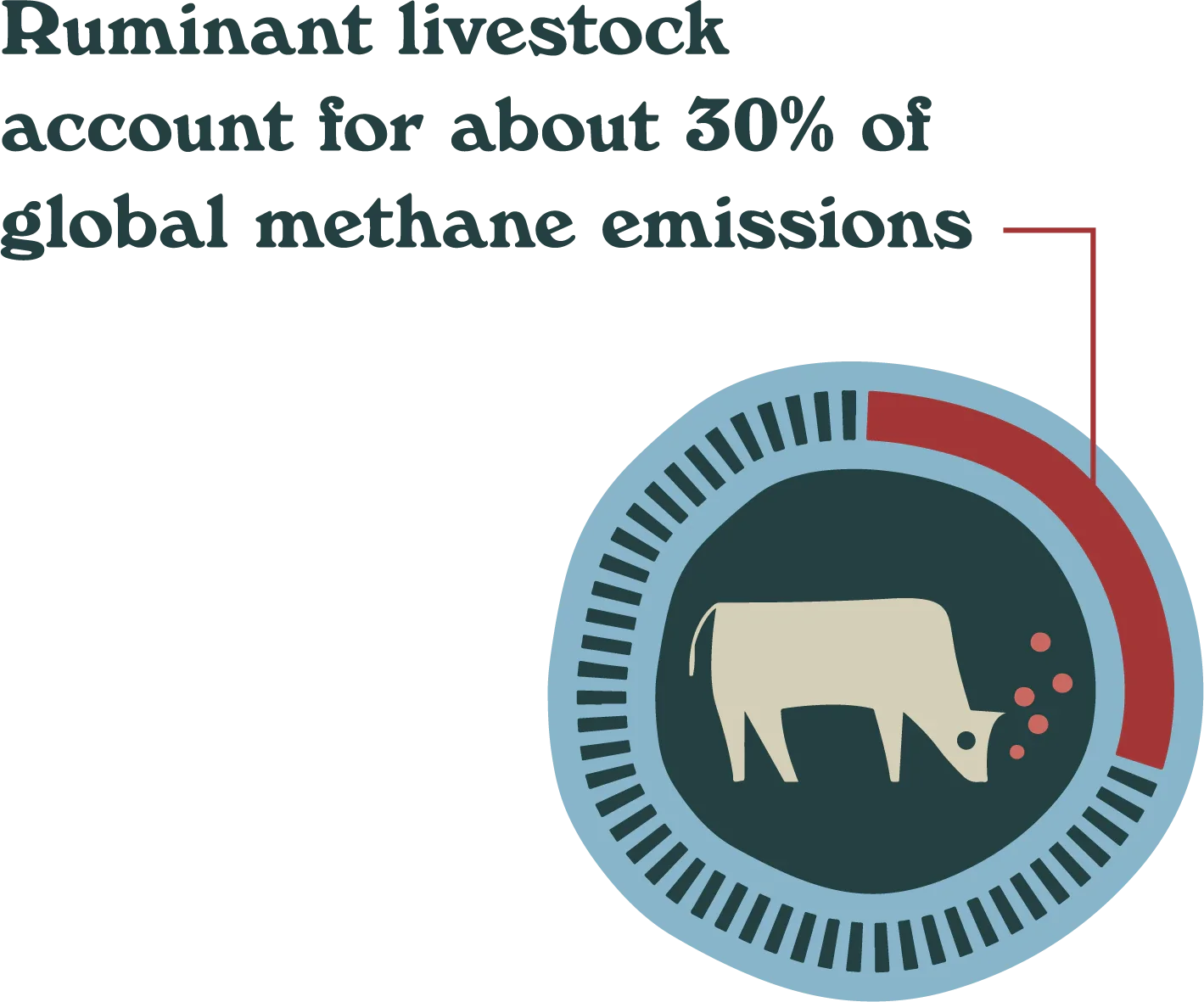
Supplying the growing world population with an abundant source of nutritious food whilst addressing climate change is one of the greatest challenges facing agriculture. Methane produced by ruminant livestock is a leading source of greenhouse gas emissions. In fact, enteric methane accounts for about 75% of all greenhouse gas emissions produced by the agricultural industry in Australia and about 15% of the country’s total greenhouse gas emissions. Livestock producers, processors, food manufacturers and supermarkets are already addressing this challenge via the adoption of carbon accounting tools and methane abatement technology. In turn, this represents a significant economic opportunity for all levels of the supply chain to generate verified carbon credits; maintain or improve market access; and develop low-emissions beef, dairy, lamb and wool brands.
Sea Forest is a global leader in the development and commercialisation of enteric methane emissions abatement technology. Based on ground-breaking research, our scientists have commercialised methane-reducing bioactive compounds that are identical to those found in red seaweed (Asparagopsis spp.), which grows in abundance in the pristine waters of Tasmania. This patented technology is now available as SEAFEED™, a unique feed supplement that improves rumen fermentation efficiency and reduces methane production in ruminant livestock. SEAFEED™ feed supplements are already being used in beef and dairy herds and feedlots throughout Australia. The use of SEAFEED™ is supported by a Verra-listed group project that enables livestock producers to easily generate verified carbon credits.
A solution borne from the sea
SEAFEED™ is available in a range of different formulations to suit different livestock production systems:
- SEAFEED™ NATURAL, an Australian Organic certified input that contains 100% naturally-extracted bioactive compounds.
- SEAFEED™ AMPLIFY, which contains a blend of naturally-extracted and bio-identical compounds.
- SEAFEED™ SUSTAIN, a sustained-release granular formulation suitable for grazing systems.
SEAFEED™ feed supplements are produced using internationally-recognised quality and safety standards to ensure consistent quality and livestock performance.
Introducing the SEAFEED™ range

How SEAFEED™ works
Ruminant livestock have a four-part stomach that enables them to digest forages and non-protein nitrogen. A complex population of microbes in the rumen ferment carbohydrates into volatile fatty acids, the primary source of energy for cattle and sheep, as well as the waste gases, carbon dioxide and methane. Bioactive compounds found in native red seaweed (Asparagopsis spp.) disrupt the methane-forming pathway when fed at very low levels to ruminant livestock. These compounds inhibit the production of methane by reacting with two key enzymes used by rumen microbes during the final stage of digestion. Energy from ingested feed is redirected from methane production, optimising the efficiency of rumen fermentation. Given that methane production consumes up to 12% of total feed energy, any reduction in methane production means that more feed energy will be available to the animal.
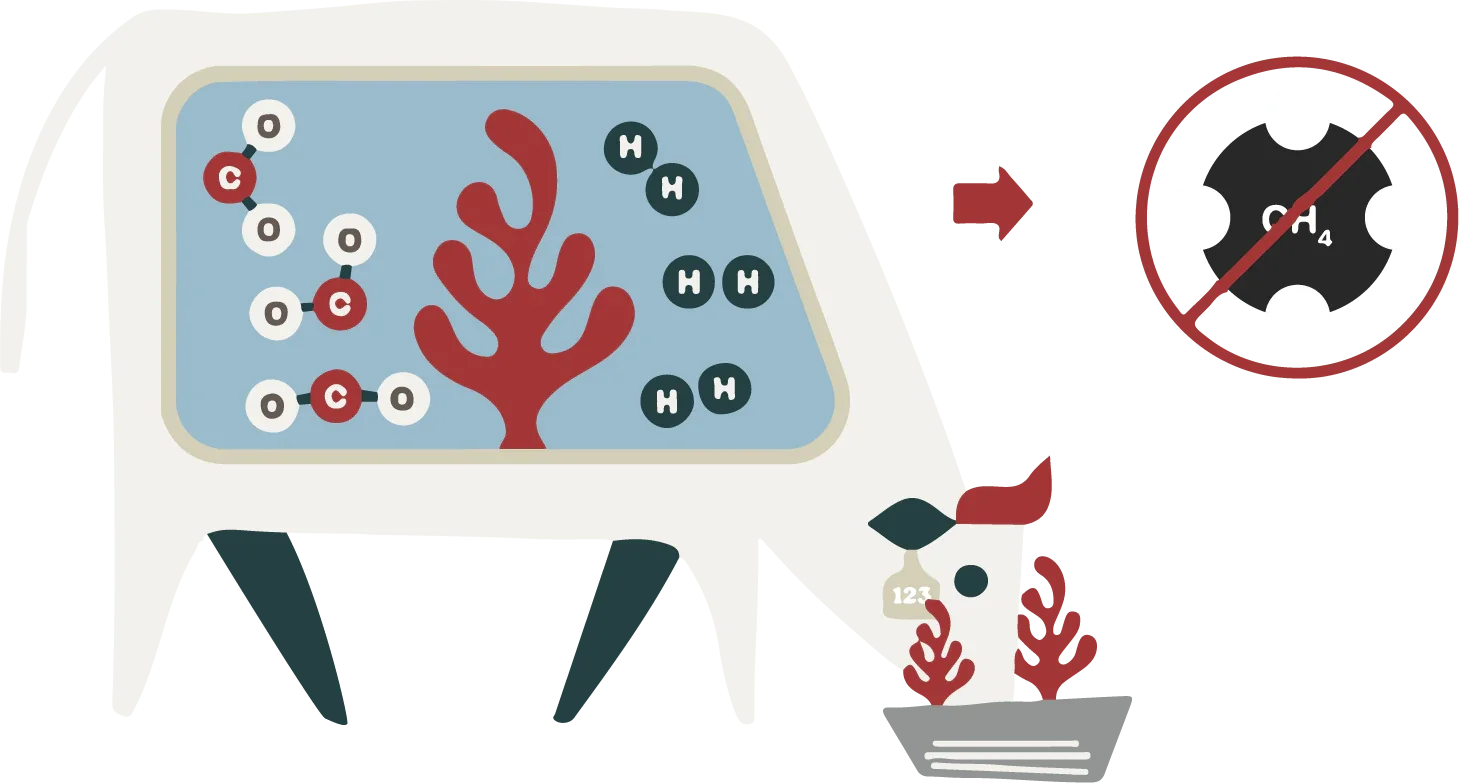
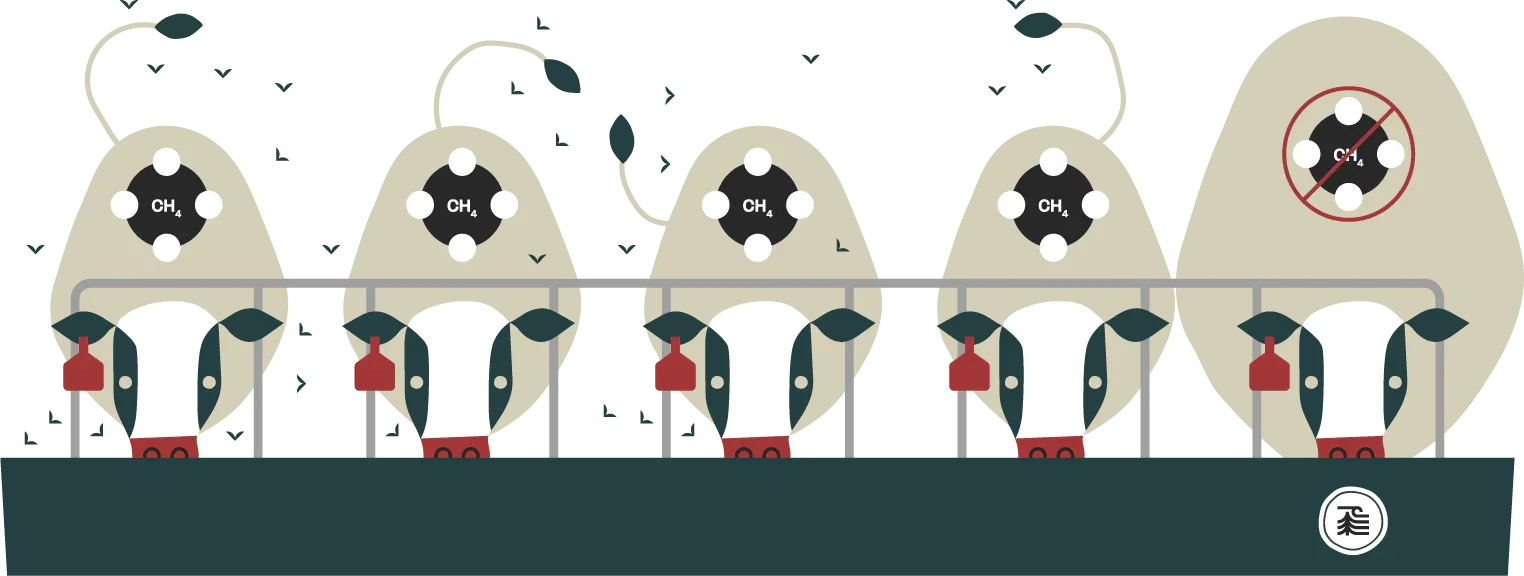
Bioactive compounds in SEAFEED™ interfere with specific enzymes used by rumen microbes during the final stages of digestion, preventing the binding of carbon and hydrogen atoms to form methane.
Without SEAFEED™
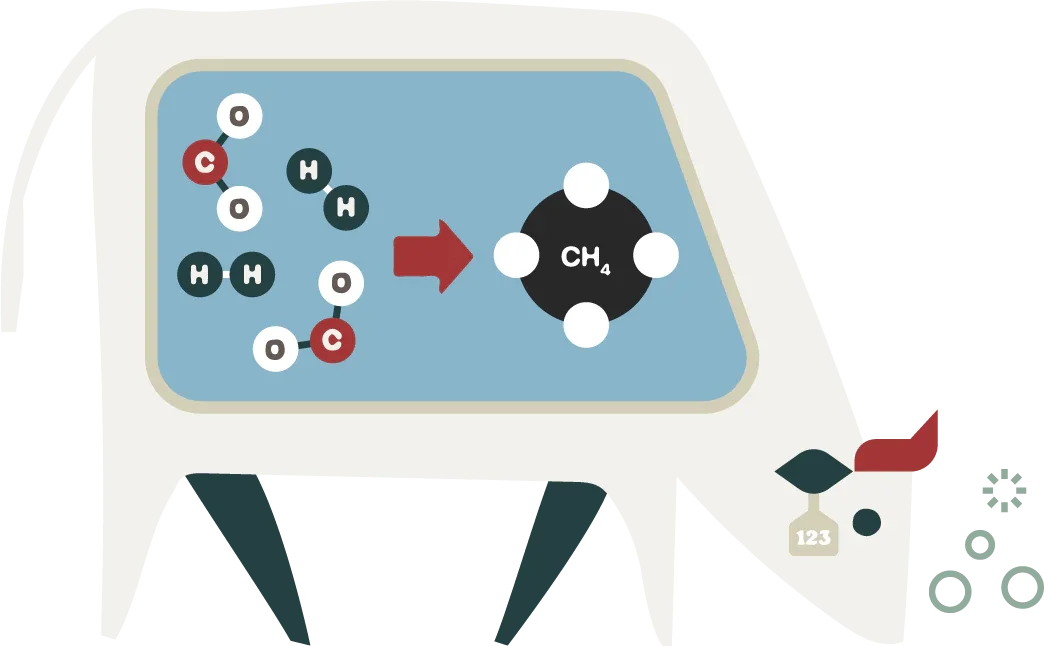
Rumen microbes use carbon and hydrogen in digested vegetative matter to produce methane. Methane is released in the atmosphere, predominantly via burping.
With SEAFEED™
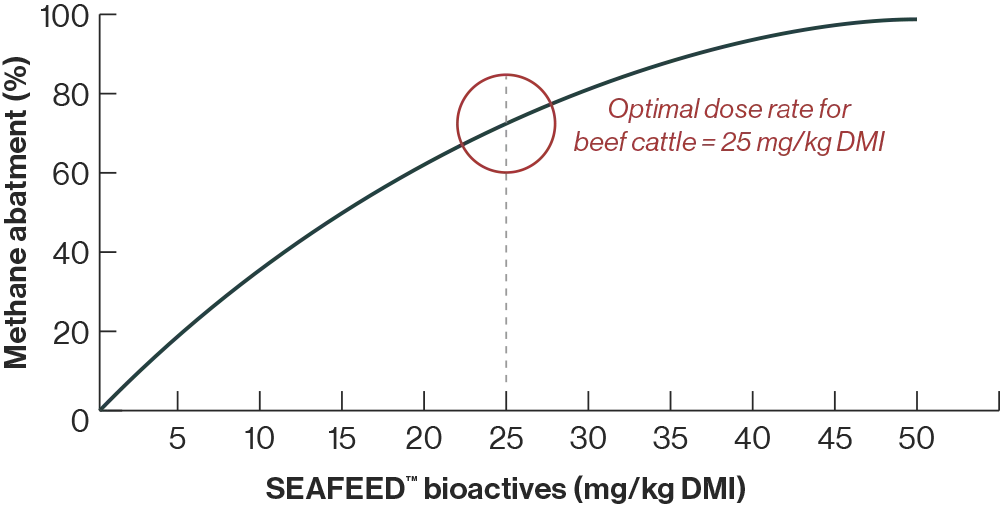
More than 40 scientific studies have demonstrated SEAFEED™ significantly reduces methane production in ruminant livestock. One trial found the addition of SEAFEED™ to the rations of feedlot cattle at three different rates (low, medium and high) reduced methane emissions by 66%, 92% and 99% respectively.3 A meta-analysis of six peer-reviewed scientific papers investigated the effect of dose rate upon methane abatement in beef1-3 and dairy cattle.4-6 This study demonstrated a dose rate of 25 mg/kg DMI results in a methane abatement of 72.2% in beef cattle. A dose rate of 20 mg/kg DMI results in a methane abatement of 60.9% in lactating dairy cows.
Significantly reduces methane production
Major Australian trials have demonstrated SEAFEED™ supports performance in grainfed cattle without any adverse impact on animal health, eating quality or human safety. In one trial, feedlot cattle fed SEAFEED™ recorded a 6.6% advantage in feed conversion efficiency and 6.9 kg HSCW advantage over a 200-day feeding period.7 Methane emissions were reduced by 51.7% over the same period.7 SEAFEED™ had no impact on marbling, meat colour, eye muscle area and ultimate pH.7 In another trial, cattle fed SEAFEED™ recorded a 7.4% advantage in FCE during the finishing period and a 5.6% advantage over the full 81-day feeding period.8Sea Forest is continuing to undertake large-scale trials and demonstrations in Australian feedlots. Commercial experience has shown the use of SEAFEED™ generates a return on investment of about 3:1 via improved livestock performance and the generation of verified carbon credits.
Supports performance in grainfed cattle
SEAFEED™ dose rate vs methane abatement1-6
Australian innovation with global impact
Sea Forest is an Australian company that is leading the world in development of technology to mitigate methane production by ruminant livestock. Sea Forest is involved in dozens of collaborative projects with livestock producers, processors, food manufacturers, supermarkets, restaurants, research organisations and government agencies throughout the world.